
Publications & Reseources
AEA’s ever-growing grant-funded research produces reports, technology briefs, case studies and other documents shared below to help support advancement of the building and retrofit industries through our R&D work.
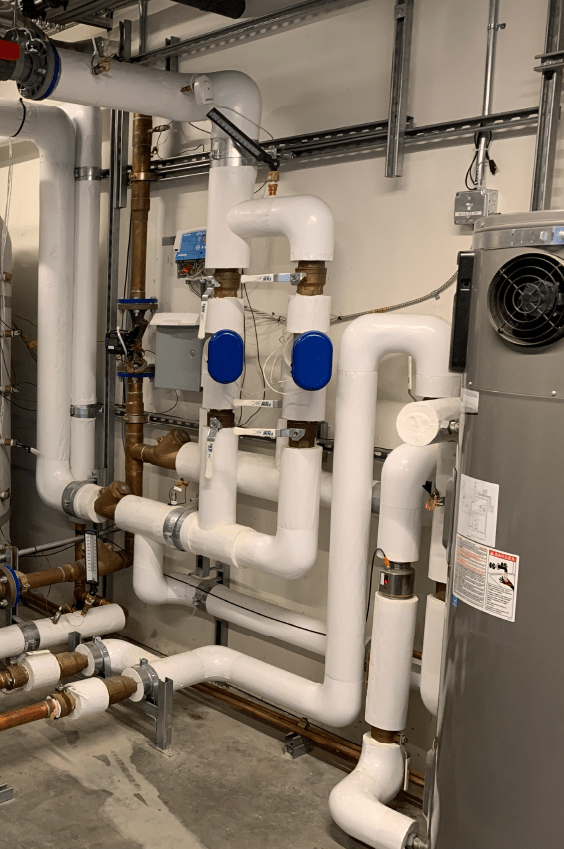
Optimizing Water Heating Performance for Multifamily Zero Net Energy
These resources were developed through the CEC EPIC EPC-15-097 award, which focused on all-electric, zero net energy design for multifamily new construction—with a special emphasis on heat pump water heating systems. The Final Report and Appendices, along with Technology Transfer documents, are published. Together, these materials share key insights and lessons learned from the applied research and demonstration grant, including detailed case studies and technology briefs.
Final Report
Technology Briefs
Case Studies

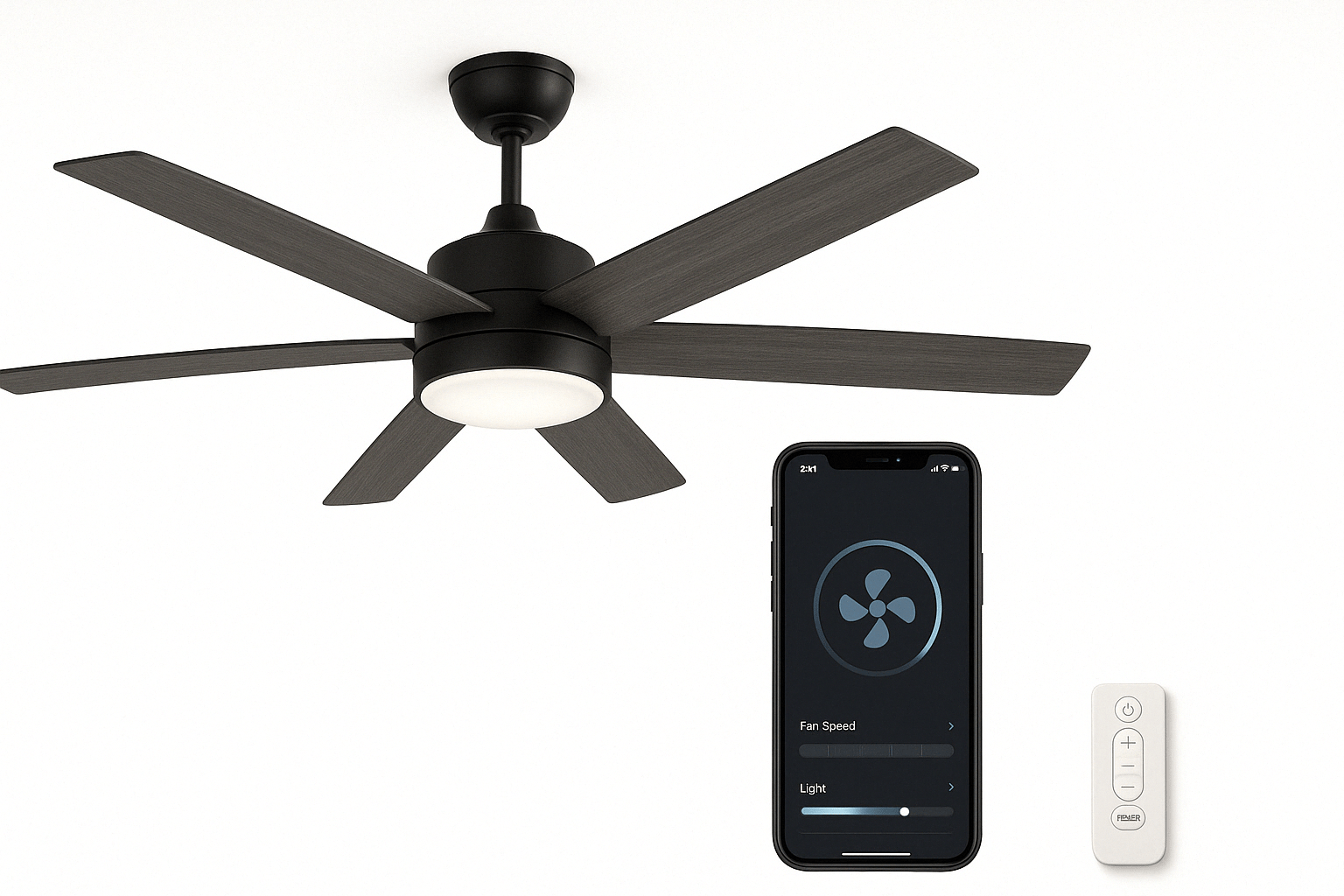
Smart Ceiling Fans and Communicating Thermostats to Provide Energy Efficient Comfort
Draft Final Report
REALIZE-CA: Mass Deployment of Energy Efficiency Retrofits in Multifamily Homes in California
Description:
These resources were developed through the CEC EPIC EPC-17-040 award, which demonstrated standardized retrofit packages for California’s low-rise multifamily affordable housing across four pilot demonstration sites serving 371 households. The Final Report documents energy performance (21% electricity reduction, 43% carbon reduction), installation costs and labor requirements, and significant resident benefits including improved thermal comfort, indoor air quality protection during wildfire events, and enhanced resilience. A design and installation standard shares critical lessons learned for future deployments.
Team Partners:
RMI
Funder:
California Energy Commission
Project Dates:
May 2019– June 2025
These resources were developed through the CEC EPIC EPC-17-040 award, which demonstrated standardized retrofit packages for California’s low-rise multifamily affordable housing across four pilot demonstration sites serving 371 households. The Final Report documents energy performance (21% electricity reduction, 43% carbon reduction), installation costs and labor requirements, and significant resident benefits including improved thermal comfort, indoor air quality protection during wildfire events, and enhanced resilience. A design and installation standard shares critical lessons learned for future deployments.
Team Partners:
RMI
Funder:
California Energy Commission
Project Dates:
May 2019– June 2025
Varieties of Prefabricated Envelope Solutions for California Low-rise Buildings
Description:
The Varieties of Prefabricated Envelope Solutions for California Low-rise Buildings project (EPC-19-036) evaluated whether prefabricated envelope systems can accelerate the decarbonization of California’s multifamily housing stock compared to conventional site-built retrofits. Panelized exterior insulation systems were deployed at two sites: wall retrofits in Southern California (Corona Del Rey Apartments) and roof retrofits in the Central Valley (Vera Cruz Village Apartments). These installations were compared against a site-built control retrofit in the Bay Area (Light Tree Three). The analysis assessed whether penalization reduces installation time and tenant disruption while maintaining or improving energy performance, cost effectiveness, and structural integrity.
Team Partners:
RMI, David Baker Architects, RDH Building Science
Funder:
California Energy Commission
Project Dates:
June 2020 – March 2025
The Varieties of Prefabricated Envelope Solutions for California Low-rise Buildings project (EPC-19-036) evaluated whether prefabricated envelope systems can accelerate the decarbonization of California’s multifamily housing stock compared to conventional site-built retrofits. Panelized exterior insulation systems were deployed at two sites: wall retrofits in Southern California (Corona Del Rey Apartments) and roof retrofits in the Central Valley (Vera Cruz Village Apartments). These installations were compared against a site-built control retrofit in the Bay Area (Light Tree Three). The analysis assessed whether penalization reduces installation time and tenant disruption while maintaining or improving energy performance, cost effectiveness, and structural integrity.
Team Partners:
RMI, David Baker Architects, RDH Building Science
Funder:
California Energy Commission
Project Dates:
June 2020 – March 2025
CEC EPIC CHALLENGE: Harmonized Resilience at Roosevelt Village: A model for equitable, replicable, grid-responsive urban housing
Description:
These resources were developed through the CEC Next EPIC Challenge award for Harmonized Resilience at Roosevelt Village, which designed and validated a grid-interactive, zero-emission model for urban mid-rise affordable housing. The findings demonstrate that right-sizing battery systems with daily load reduction strategies, rather than prioritizing rare worst-case outage scenarios, achieves both grid benefits and meaningful resilience for dense mid-rise housing in mild climates at only a 5% cost premium compared to a Title 24 compliant all-electric baseline design. Applied to Roosevelt Village, the design achieved 23% annual energy reduction, 70% operational carbon reduction, 17% embodied carbon reduction, and 94% curtailment of residential peak energy use during critical grid hours (4:00 p.m. to 9:00 p.m.). Critically, one central battery providing could sustain critical loads in both apartments and common areas during most power outages, a profound advancement for multifamily resilience. Findings were validated through techno-economic analysis, resident focus groups, and two additional case studies.
Team Partners:
David Baker Architects, UC Berkeley Center for the Built Environment, RMI, Taylor Engineers, The Engineering Enterprise, Lawrence Berkeley National Lab
Funder:
California Energy Commission
Project Dates:
May 2022 – June 2025
These resources were developed through the CEC Next EPIC Challenge award for Harmonized Resilience at Roosevelt Village, which designed and validated a grid-interactive, zero-emission model for urban mid-rise affordable housing. The findings demonstrate that right-sizing battery systems with daily load reduction strategies, rather than prioritizing rare worst-case outage scenarios, achieves both grid benefits and meaningful resilience for dense mid-rise housing in mild climates at only a 5% cost premium compared to a Title 24 compliant all-electric baseline design. Applied to Roosevelt Village, the design achieved 23% annual energy reduction, 70% operational carbon reduction, 17% embodied carbon reduction, and 94% curtailment of residential peak energy use during critical grid hours (4:00 p.m. to 9:00 p.m.). Critically, one central battery providing could sustain critical loads in both apartments and common areas during most power outages, a profound advancement for multifamily resilience. Findings were validated through techno-economic analysis, resident focus groups, and two additional case studies.
Team Partners:
David Baker Architects, UC Berkeley Center for the Built Environment, RMI, Taylor Engineers, The Engineering Enterprise, Lawrence Berkeley National Lab
Funder:
California Energy Commission
Project Dates:
May 2022 – June 2025
Publications
Low-GWP Mechanical Modules (LG-MM) for Rapid Deployment Project
Description:
These resources were developed through the CEC EPIC EPC 19-032 award, which studied the design and applications of combined mechanical systems that deliver 3 or 4 of a home’s major mechanical end uses–space heating, space cooling, domestic water heating, and ventilation–through one system that uses a single heat pump with low-global warming potential (GWP) refrigerant. The Final Report and Appendices are published, as are the Technology Transfer documents produced under this award: two technology briefs, one case study, and one webinar. These resources share lessons learned and recommendations on the use cases and efficacy of this class of technology.
Team Partners:
Emanant Systems, LBNL, RMI, Smith Group
Funder:
California Energy Commission
Project Dates:
June 2020 – March 2025
These resources were developed through the CEC EPIC EPC 19-032 award, which studied the design and applications of combined mechanical systems that deliver 3 or 4 of a home’s major mechanical end uses–space heating, space cooling, domestic water heating, and ventilation–through one system that uses a single heat pump with low-global warming potential (GWP) refrigerant. The Final Report and Appendices are published, as are the Technology Transfer documents produced under this award: two technology briefs, one case study, and one webinar. These resources share lessons learned and recommendations on the use cases and efficacy of this class of technology.
Team Partners:
Emanant Systems, LBNL, RMI, Smith Group
Funder:
California Energy Commission
Project Dates:
June 2020 – March 2025
Publications
Optimizing Water Heating Performance for Multifamily Zero Net Energy
Description:
These resources were developed through the CEC EPIC EPC-15-097 award, which focused on all-electric, zero net energy design for multifamily new construction—with a special emphasis on heat pump water heating systems. The Final Report and Appendices, along with Technology Transfer documents, are published. Together, these materials share key insights and lessons learned from the applied research and demonstration grant, including detailed case studies and technology briefs.
Project Dates: 2016-2021
Project Dates: 2016-2021
Final Report
Technology Briefs
Case Studies
Smart Ceiling Fans and Communicating Thermostats to Provide Energy Efficient Comfort
Description:
A 2016-2021 field study conducted by Association for Energy Affordability (AEA) and partners evaluated the performance of 99 automated ceiling fans staged alongside air conditioning over 29 months in ten air-conditioned buildings in a hot/dry Californian climate. The study found that using ceiling fans to pre-cool and then run concurrently with HVAC systems allowed the air-conditioning setpoints to be raised — resulting in a 36% reduction in cooling-season compressor energy usage (41% during summer peak hours) and a median weather-normalized energy savings per compressor of 21%. Occupant surveys and interviews widely reported maintained or improved comfort. The findings suggest that combining air movement from modern ceiling fans with air conditioning can significantly reduce cooling energy consumption while preserving thermal comfort — making it a promising retrofit strategy for energy-efficient cooling.
Project Dates:
2016-2020
A 2016-2021 field study conducted by Association for Energy Affordability (AEA) and partners evaluated the performance of 99 automated ceiling fans staged alongside air conditioning over 29 months in ten air-conditioned buildings in a hot/dry Californian climate. The study found that using ceiling fans to pre-cool and then run concurrently with HVAC systems allowed the air-conditioning setpoints to be raised — resulting in a 36% reduction in cooling-season compressor energy usage (41% during summer peak hours) and a median weather-normalized energy savings per compressor of 21%. Occupant surveys and interviews widely reported maintained or improved comfort. The findings suggest that combining air movement from modern ceiling fans with air conditioning can significantly reduce cooling energy consumption while preserving thermal comfort — making it a promising retrofit strategy for energy-efficient cooling.
Project Dates:
2016-2020